Prepared for the Guangzhou HQ visit · 17 Sep 2026

XPeng Physical AI
Atlas

Every vehicle XPeng sells, every physical-AI programme it has put into production, and the autonomy stack underneath all of it — with the prices, the volumes and the dates as they actually stand. Prices converted at USD/CNY 6.70.

$10.34XPEV, 16 Sep close — 52-week range $10.16–$28.24
$9.9bnMarket cap, ~957m ADS
$6.3bnPost-money mark on the robotics unit alone, Aug 2026
39,107August deliveries, +4% YoY — against a 60,000/month Q4 target

01 — Passenger vehicles on sale or launching in 2026

The lineup

Eleven nameplates across three tiers: MONA at RMB 120–160k, the G/P core at RMB 175–300k, and the GX / X9 flagships above RMB 270k. Four of these are brand-new in 2026 and are what management is counting on to get from 39k a month to 60k. Prices are current China MSRP before the optional Ultra SE (+RMB 12,000) and Ultra (+RMB 20,000) ADAS packs.

No press image

MONA M03

A-class sedan
BEV
$17,900–22,700¥119,800–151,800
Range
Up to 620 km CLTC
Launched
Aug 2024 · Max trim May 2025
Status
Selling

The car that saved the company. China's best-selling A-class BEV sedan for 19 consecutive months, 100,000 deliveries in its first eight months, and >85% of buyers take the Max or Ultra SE trim — i.e. they pay up for the Turing chip. This is He Xiaopeng's "technology equality" proof point.
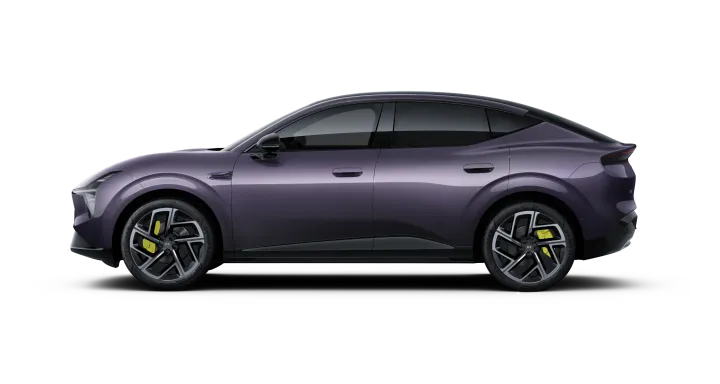
XPeng MONA L03 crossover, side profile

MONA L03

Compact SUV
BEV + EREV
$18,500–23,400¥123,800–156,800
Range
525–650 km BEV · up to 1,380 km EREV
Launched
China 16 Jul 2026 · Munich global launch Jul 2026
Europe
From €35,600 · 64 overseas markets
Status
Ramping

Record order book for any XPeng model and the single biggest swing factor in Q4. Launched RMB 20,000 below its own pre-sale price. Currently supply-constrained — on double shifts, with management blaming extreme weather and supply chain. Deutsche Bank models ~12,500/month. Overseas deliveries start Q4. First car anywhere with the Google Maps Auto SDK in APAC.

Launches Q4 2026

MONA L05

Mid-size SUV
BEV + EREV
Not yet pricedQ4 2026
Size
4,870 mm long · 2,940 mm wheelbase
Status
Q4 2026

The third MONA, and the last new nameplate before the 60k/month target has to be hit. Two further MONA models are reported to follow, taking the budget brand to at least five vehicles including a station wagon.

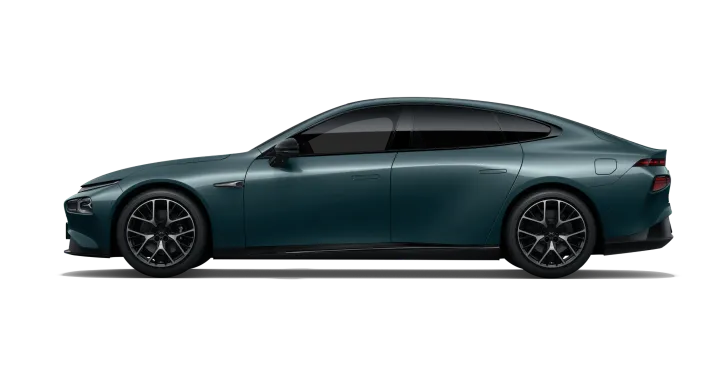
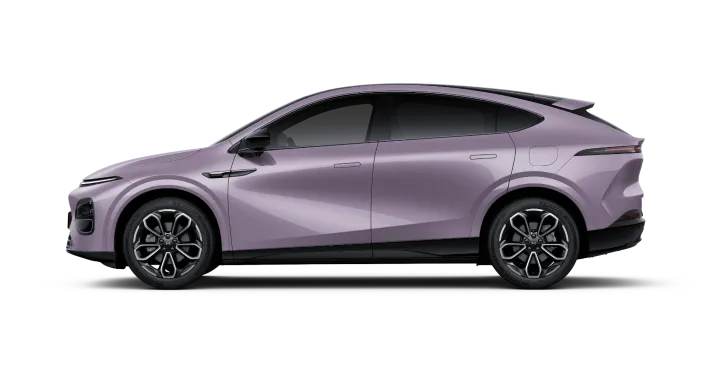
XPeng G6 coupe SUV, side profile

G6

Mid-size coupe SUV
BEV
$26,400–27,900¥176,800–186,800
Range
625 km (68.5 kWh) · 725 km (80.8 kWh) CLTC
Power
218 kW single rear motor
Refreshed
Jan 2026, up to 2,250 TOPS
Status
Selling

Core European volume model alongside the G9 — both are built locally at Magna Steyr in Graz, Austria for the EU market.

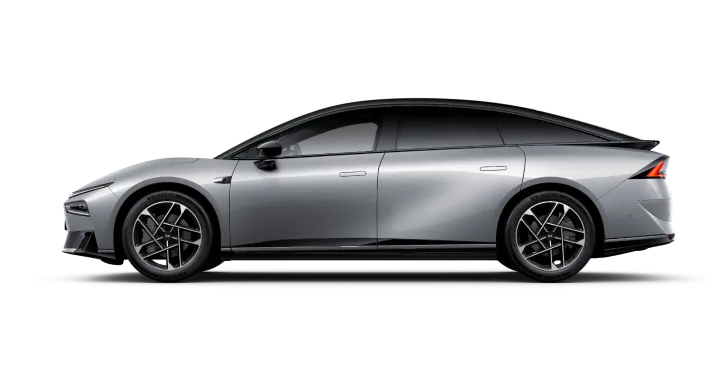
XPeng P7+ fastback sedan, side profile

P7+

Mid-large sedan
BEV
From $27,900From ¥186,800
Launched
Nov 2024 — "the world's first AI-defined car"
Status
Selling

30,000 firm orders on launch night; 50,000th unit built five months later. Ranked #1 pure-electric sedan in the RMB 150–200k segment. First model to standardise the AI Hawkeye pure-vision ADAS across every trim — no LiDAR, no HD maps.

No press image

G7

Mid-size SUV
BEV
$29,200–33,700¥195,800–225,800
Compute
3× Turing · 2,250 TOPS on Ultra
Launched
Jul 2025
Status
Selling

The first XPeng shipped with the in-house Turing SoC. In its first four weeks the Ultra trim was over 50% of sales — the clearest evidence that buyers will pay for compute. This is the car that made the "AI is the differentiator" argument commercially, not rhetorically.

XPeng P7 sports sedan, side profile

P7 (2nd gen)

Sports sedan
BEV · 800V
$32,800–45,000¥219,800–301,800
Range
702 / 750 / 820 km CLTC
Chassis
800V architecture, dual-chamber air suspension standard
Launched
27 Aug 2025 · Europe debut Munich Sep 2025
Status
Selling

10,000 firm orders in the first seven minutes. Priced RMB 80,000 below the RMB 300k point management had been signalling. Top-3 BEV sedan in the RMB 200–300k band and the car that pushed monthly deliveries above 40,000 from September 2025.

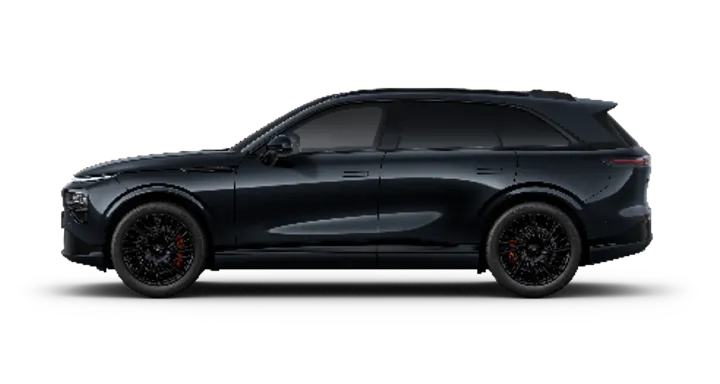
XPeng G9 large SUV, side profile

G9

Large SUV
BEV
$37,100–41,600¥248,800–278,800
Range
625 km (79 kWh) · 725 km (93.1 kWh) CLTC
Power
258 kW RWD · 423 kW AWD
Refreshed
Jan 2026, up to 2,250 TOPS
Status
Selling

The premium anchor in Europe, built at Graz. Norway was XPeng's first overseas market (first store, end-2020) and the Nordics remain the strongest per-capita territory.

Launching 17 Sep 2026

G9L

Flagship 5-seat SUV
BEV + EREV
From $38,800From ¥259,800 pre-sale
Size
5,120 mm long · 3,100 mm wheelbase
Range
Up to 755 km · rear-wheel steering
Power
Up to 430 kW dual motor
Status
Launch event today

The China launch event is 17 September 2026 — the same day as the HQ visit. Pre-sales opened 11 Aug with six versions across BEV and EREV. Aimed squarely at the Li L7 and the Huawei-backed AITO M7. Brian Gu said on 10 Sep he had spent two hours that morning testing the latest autonomy build in a G9L.

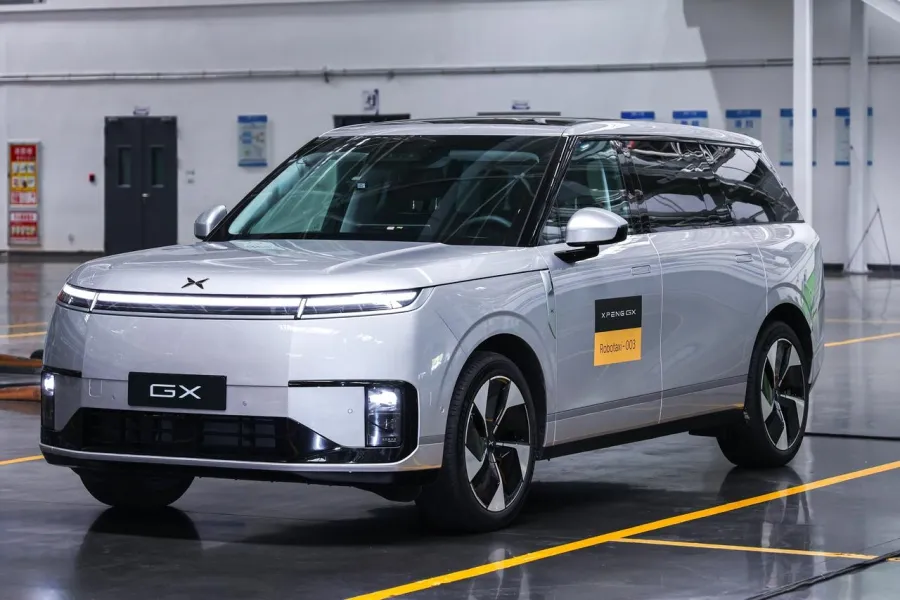
XPeng GX full-size SUV in robotaxi configuration, front three-quarter view

GX

Flagship 6-seat SUV
BEV + EREV
$40,300–53,700¥269,800–359,800
Range
Up to 750 km CLTC
Chassis
Steer-by-wire · rear-wheel steering · six-way full redundancy
Launched
20 May 2026 (pre-sale had been ¥399,800)
Status
Selling

China's first factory-fitted robotaxi platform from an OEM, and the most important car in the story — it is both the flagship and the autonomy hardware reference. >80% of initial orders took the RMB 350k+ Ultra flagship trim; >7,000 domestic deliveries in July; top-3 in China's RMB 300k+ NEV SUV segment. Note it launched RMB 130,000 below its own pre-sale price.

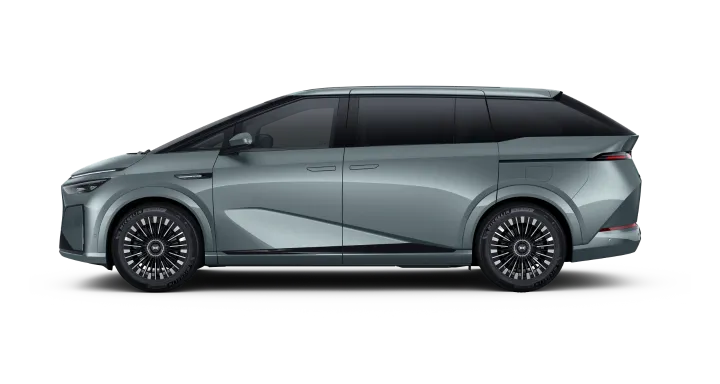
XPeng X9 electric MPV, side profile

X9 / X9 Super EREV

Full-size MPV
BEV + super EREV
$46,200–55,200¥309,800–369,800
Range
Up to 1,602 km combined (EREV) · 450+ km pure electric
Battery
5C high-capacity LFP
Refreshed
Gen-3 Mar 2026, ~RMB 50,000 price cut
Status
Selling

The Kunpeng Super EREV X9 opened the "one vehicle, dual energy" era in Nov 2025. Pre-orders came in at nearly 3× the previous X9 on a like-for-like basis, concentrated in northern and inland China — exactly the BEV-resistant buyers the EREV strategy was built for.

02 — Deliveries, and the gap that has to close

Volume

2025 was the best year in XPeng's history. 2026 has been a step backwards on any year-over-year measure, and the fourth quarter carries an unusually large amount of weight.

Quarterly deliveries

Actual Guide / target

Units · Q1 2024 – Q4 2026 · Q3 is company guidance midpoint, Q4 is 3 × the stated 60k monthly target

The shape of the problem. Q2 2026 deliveries of 103,295 were essentially flat against Q2 2025's 103,181. The "+65% quarter-on-quarter" headline on the Q2 call is measured off an unusually weak Q1. First-half 2026 was down 15.8% year-on-year — the worst of the Chinese EV startups, in a half when NIO grew 67%.

Monthly deliveries, 2026

Reported Implied by guidance

Units · September bar is the midpoint of what Q3 guidance requires after July and August

What has to happen. July and August delivered 77,134 between them, so Q3 guidance of 115,000–121,000 requires 37,900–43,900 in September — reachable. The Q4 target is the hard one: above 60,000 per month, a 53% step up from August, and it rests on the G9L launching today, MONA L05 arriving in Q4, and overseas L03 deliveries starting, all at once, while the L03 is still supply-constrained.

03 — The four programmes that share one stack

Physical AI

Same Turing silicon, same VLA model family, same data and training pipeline, largely the same supply chain. That reuse argument is the whole thesis — and the reason the robot option is cheaper for XPeng than for a standalone robotics company.

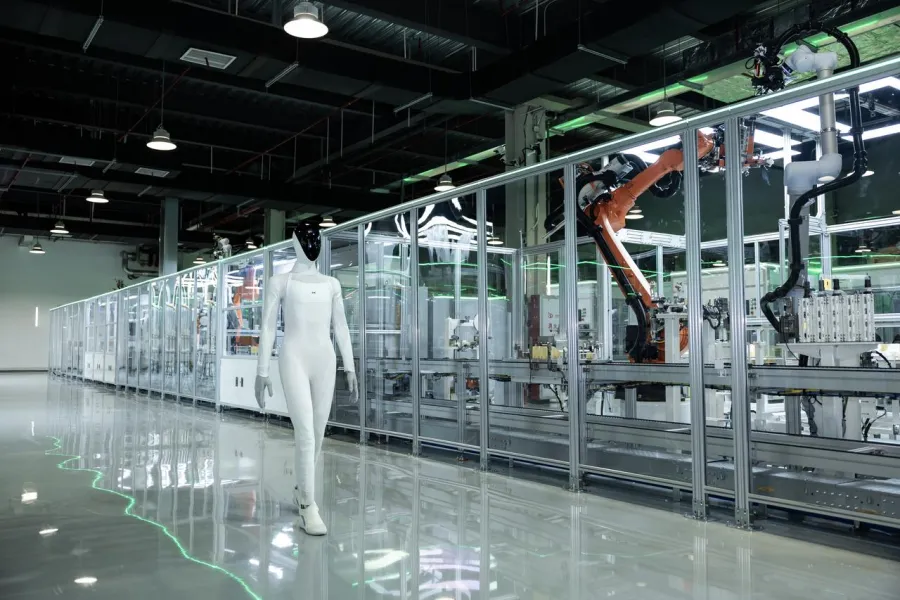
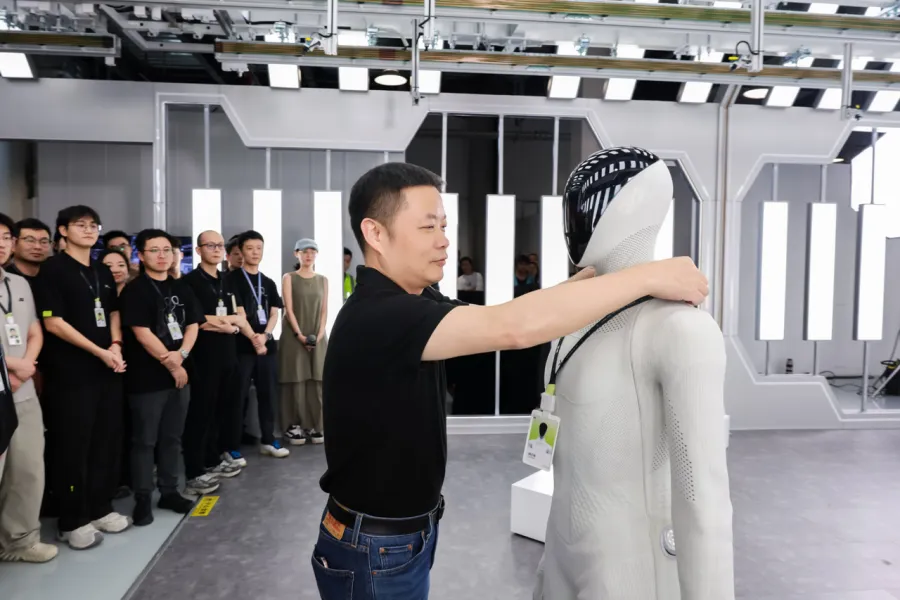
The IRON humanoid robot walking beside XPeng's newly commissioned robot production line in Guangzhou

Humanoid robot

IRON

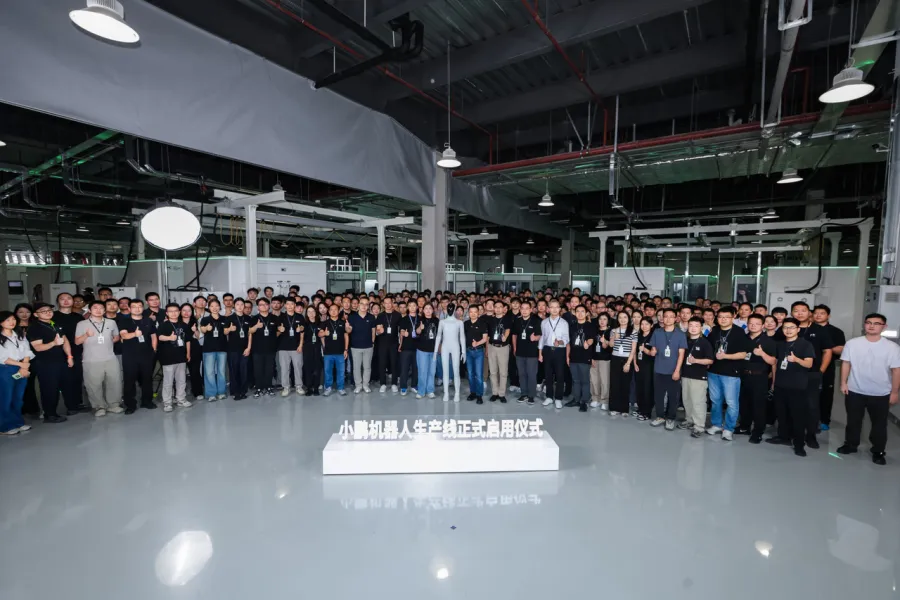
A general-purpose humanoid built to automotive-grade standards, with everything from the SoC to the dexterous hand designed in-house. Production lines in Guangzhou were commissioned on 8 September 2026 with over 80% core-process automation, and IRON walked off the line under its own control. Retail and service roles first — store sales assistant, tour guide, museum docent, supermarket checkout — then industrial, then household.

Body
76 degrees of freedom across the body, 21 per hand, fully enclosed flexible lattice structure, soft skin, 1.69–1.70 m tall — deliberately clothed, deliberately faceless
Brain
3× Turing SoCs, ~2,250 TOPS on-device. Dozens of models run locally — whole-body motion, vision, speech, a separate safety model and a "mid-brain". No teleoperation.
Timeline
Scaled production end-2026, first deployments in XPeng stores and campuses · external deliveries in China and overseas in 2027, ramping to several thousand units/month
Supply chain
>50% overlap with the EV supply chain (Brian Gu); He Xiaopeng puts supplier overlap at >85% — but "most are not readily available parts"
Economics
Market humanoids price at 2.5–3× BOM. Management guides hardware gross margin above the car business from day one, with software ~50% of value versus 10–15% for cars
Founder's odds
Asked directly in May 2026 what his win rate was, He Xiaopeng said "about two in ten"
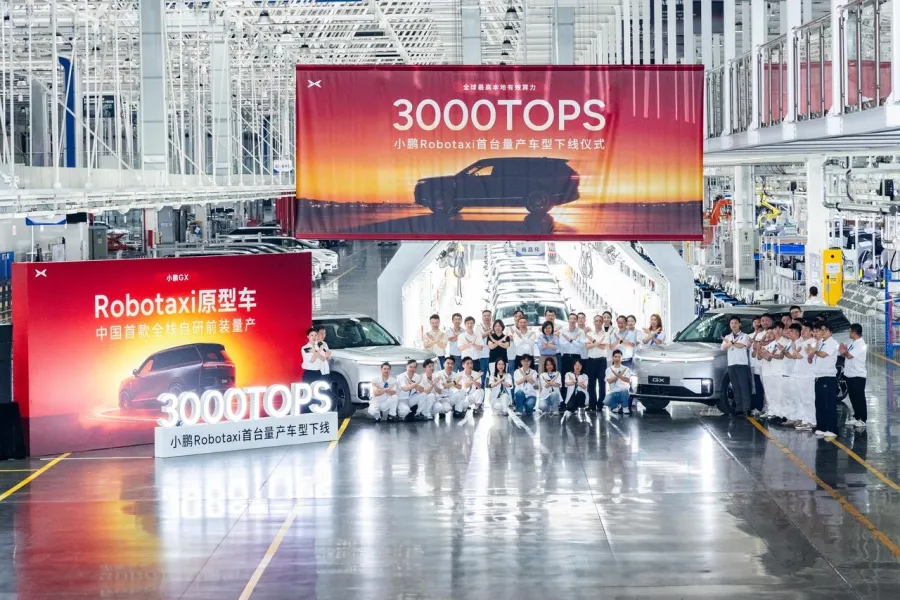
Line-off ceremony for XPeng's first mass-produced robotaxi in Guangzhou, with a 3000 TOPS banner

Autonomous mobility

Robotaxi

Built on the GX platform with six-way full redundancy, no HD maps and no LiDAR — which is the entire generalisation-and-cost argument against Waymo, Baidu and Pony. XPeng self-operates in Guangzhou only, as a demonstration; everywhere else it sells the vehicle and stack to operating partners and takes a share of the revenue.

Compute
4× Turing SoCs, ~3,000 TOPS — the highest on-board compute of any production vehicle
Progress
Mass production started 18 May 2026 · 2,000+ internal test orders in Guangzhou · August 2026 permit for remote testing with no onboard safety operator on designated Guangzhou roads · cloud remote-takeover platform complete
Next
Paying passengers with no safety operator in 2027 · purpose-built economy robotaxi model in 2027 · three robotaxi models planned
Scale
Brian Gu to Reuters: hundreds to low thousands of units over 12–18 months. Amap is the first ecosystem partner.
He's dates
Technical L4 by 2028; cheap, large-scale L4 by 2030 — with policy and social acceptance, not technology, as the binding constraint
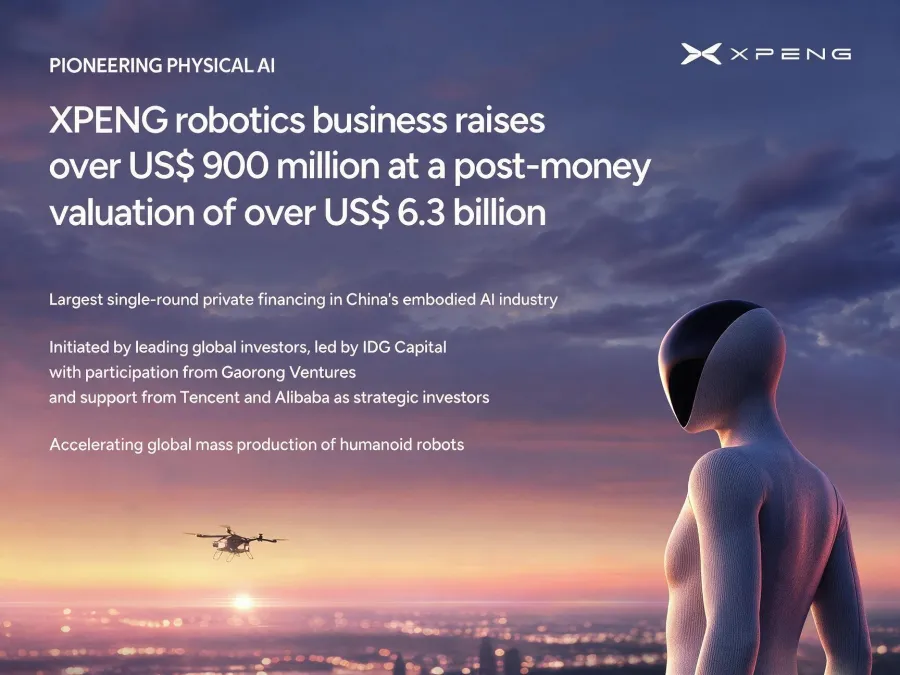
XPeng announcement graphic: robotics business raises over US$900 million at a post-money valuation of over US$6.3 billion

Capital structure

The robotics round

Announced 24 August 2026, the same day as Q2 results. XPeng calls it the largest single private round in China's embodied-AI industry. The unit remains 100% consolidated — a separation window exists but Brian Gu says the financials stay inside the group either way.

Size
Over US$900m at over US$6.3bn post-money
Split
$600m external · $200m from XPeng itself · $100m from senior executives' own money
Investors
Led by IDG Capital, with Gaorong Ventures; Alibaba and Tencent as strategic investors
Separation
An 18-month window to operationally separate — but consolidation is unaffected, and no robotics P&L is disclosed
Read-across
The robotics unit alone is privately marked at 64% of XPeng's entire public market cap
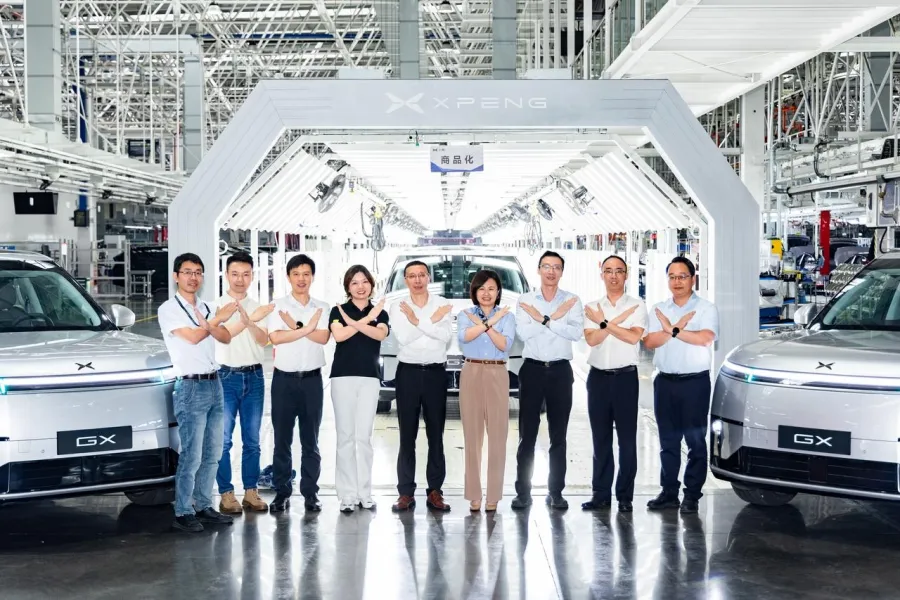
Two XPeng GX vehicles at either side of a production line archway in the Guangzhou plant

Silicon

Turing AI SoC

The part that makes the reuse argument real: one chip family in the cars, the robotaxi and the robot. Volkswagen is the first external customer, which is the only third-party validation of the AI stack that comes with cash attached.

Spec
40-core, ~700–750 TOPS per chip, designed to run models up to ~30bn parameters on-device. Tape-out Aug 2024.
Fab
TSMC — not SMIC. XPeng designs, TSMC manufactures. Gu says there are no access constraints on the chips they need; memory cost and supply is the live issue.
Configurations
3 chips / 2,250 TOPS in Ultra passenger cars and in IRON · 4 chips / 3,000 TOPS in the robotaxi
Volume
200,000+ shipped by Mar 2026 · ~1m units targeted for 2026 · replaced Nvidia as XPeng's go-to high-compute mobility chip
Parity claim
Gu: "similar to Nvidia Thor… for these onboard edge computing mobility chips, I think we're already there" — while conceding a generation gap remains in cloud training silicon

Ecosystem, not a segment

ARIDGE — the flying car

Formerly XPeng AeroHT. XPeng incubated it and is now a minority shareholder; it is not consolidated, so it belongs in the sum-of-the-parts, not the P&L. The "Land Aircraft Carrier" is a six-wheel mother ship carrying a detachable two-seat eVTOL.

Product
~30 minutes flight, two passengers, ~800 kg module, automatic load/unload, redundant flight control
Price
Under RMB 2m (~$299,000) — luxury-car money for a car and an aircraft
Orders
~7,000 indicative orders · first unit off the Guangzhou line Nov 2025 · awaiting CAAC type certification
Adoption
Gu: penetration will take 3–5× longer than an auto cycle. He Xiaopeng: 5–15 years to matter.
Ambition
The world's largest aircraft maker sells ~800 units/year; XPeng thinks 1,000–2,000+ is achievable, which then funds range and speed improvement

04 — VLA 2.0, and where it actually stands against FSD

The autonomy stack

XPeng and Tesla are the only two companies shipping a single end-to-end model driving a production car. That is the comparison management invites, so it is the one worth making carefully — including where XPeng's own marketing overstates it.

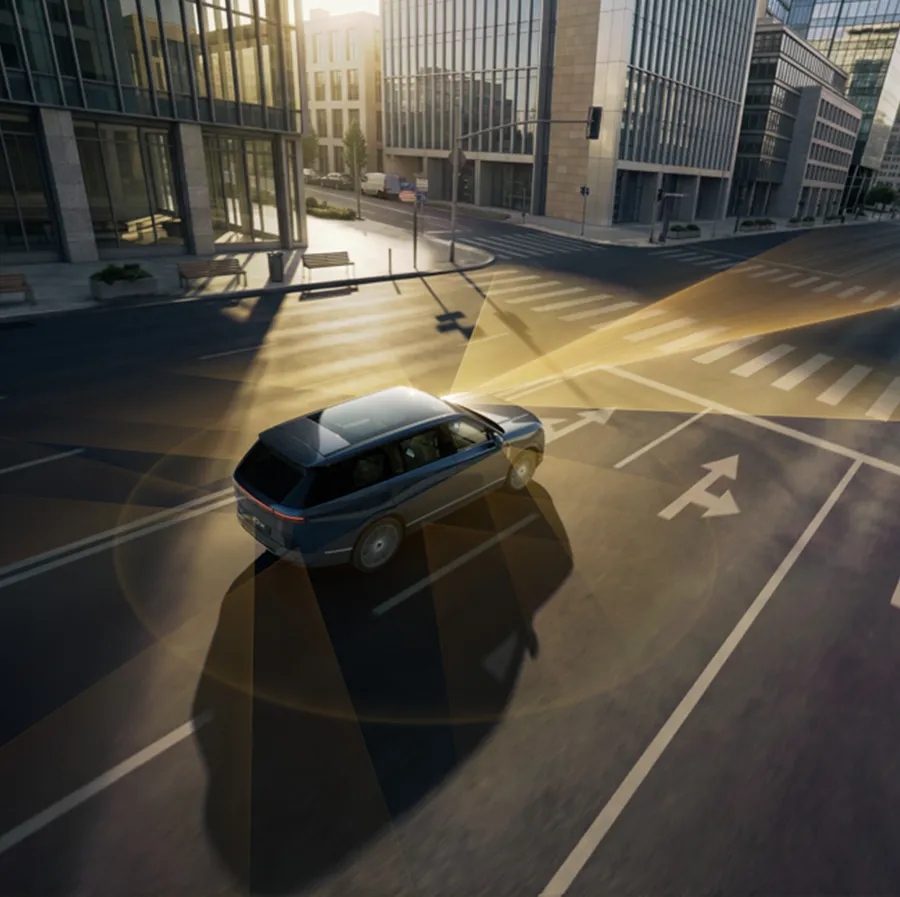
Illustration of an XPeng vehicle at an urban intersection with 360-degree sensor coverage fields projected around it

Sensor stack

What is actually on the car

XPeng markets "pure vision" and it is broadly true for the perception model — the AI Hawkeye stack has run without LiDAR and without HD maps since the P7+ in November 2024, and VLA 2.0 dropped LiDAR entirely. But "pure vision" is a claim about the driving model, not about the bill of materials.

Cameras
7 exterior cameras feed the driving stack, plus 4 more exterior cameras for non-AD functions and 1–2 interior cameras for driver monitoring (drowsiness → alerts → automatic pull-over with hazards)
Also fitted
Recent models including the P7+ and G7 still carry 3 millimetre-wave radars and 12 ultrasonic sensors. They are not in the perception model's critical path, but they are on the car.
No LiDAR
XPeng pioneered LiDAR in Chinese ADAS and then abandoned it. Same for HD maps.
Compute
3× Turing / 2,250 TOPS on Ultra trims; 4× Turing / ~3,000 TOPS on the robotaxi
Redundancy
The GX adds six-way full redundancy — power, drivetrain, wiring — borrowed from flying-car design practice. He Xiaopeng: "rats chew the harness, you can still drive."
DimensionXPeng VLA 2.0Tesla FSD
Architecture Single end-to-end vision-language-action model plus a VLM for cockpit/language. From v6.3.0 (late Aug 2026) the driving and cockpit models are merged. Single end-to-end neural network. The only other production car shipping this architecture.
On-device model v6.3.0 raises parameters 3.5×; target ~20bn by end-2026, up from ~1bn Not disclosed
Sensors Cameras only for perception; radar and ultrasonics still fitted for other functions. No LiDAR, no HD maps. Cameras only. No radar, no LiDAR, no HD maps.
Silicon In-house Turing, ~700–750 TOPS/chip, 3 chips on Ultra. TSMC-fabbed. In-house AI4/AI5. Samsung and TSMC.
Independent verdict InsideEVs, April 2026: smooth and confident, but still trails FSD overall — leans too hard on the lead car, reacts late to lane changes. Forbes was more positive on China-specific driving. Still the reference. He Xiaopeng's stated target was to match FSD v14.2 in China by 30 Aug 2026.
Claimed edge He Xiaopeng: better on narrow roads, urban-village lanes, parking structures and unmapped terrain. Says FSD does emergency stops where VLA flows. Larger real-world fleet and a far longer data history; stronger on highway and structured urban.
Generalisation test The single most valuable claim in the story: a model trained essentially only on Chinese data performed nearly as well on European roads, tested in Germany's Black Forest, with no European post-training. Trained globally; China deployment has been repeatedly constrained by regulation and data localisation.
Monetisation Currently free — bundled in the Ultra trim, no separate charge. Management has said it may charge later; the model is explicitly undecided. Paid — one-time purchase or subscription.
Europe Testing now; regulatory approval targeted H1 2027 under the DCAS framework. Country order not disclosed. Long-delayed European approval, also pending under DCAS.
Third-party licensing Volkswagen is the first external customer for both Turing and VLA 2.0. A group-level BD team was created in 2026 to pursue more OEMs and Tier 1s. Repeatedly discussed, never signed at scale.
AI spend ~$500m/year on AI training (per XPeng at CVPR 2026); RMB 7bn of physical-AI R&D budgeted for 2026, all expensed Substantially larger

05 — Before the 30-minute NGP test drive

Watch before you drive

Long-form POV drives are far more informative than any clipped demo. The Guangzhou city-streets run is the closest analogue to what the IR team will show you; the uncut European drive is the best independent test of the generalisation claim.

Xpeng VLA 2.0 Test Drive: City Streets of Guangzhou Ludicrous Feed · 34:37 · XPeng GX The closest match to the drive you will be given — same city, same car, uncut.
XPeng VLA 2.0 Test — Smooth, and not afraid to get its elbows out Inside China Auto · 26:59 Independent, critical, and good on the assertive-merging behaviour that distinguishes VLA from FSD.
FSD From China Driving in Europe — full 30-minute test drive Artur's Tech Tales · 33:02 · Europe The single best independent check on the generalisation claim — a China-trained model on European roads, uncut.
2026 XPeng P7+ RWD VLA 2.0 POV Test Drive David's Road Collection · 30:02 Uncut POV on a mainstream trim rather than the flagship.
Richard Hammond on VLA 2.0 XPENG (official) · 8:47 Company-produced, so discount it — but it is the pitch you will hear in the room.
Brian Gu — Physical AI, Flying Cars and Humanoid Robots In Good Company w/ Nicolai Tangen · 10 Sep 2026 One week old. The most calibrated management account on record — he concedes the training-silicon gap and the EVTOL timeline.
He Xiaopeng — Li Dan interview 《互相关注》EP04 2 Sep 2026 · 2:02 · English subtitles HQ walkthrough, flying car, robot lab and an NGP ride through the same Guangzhou urban-village lanes you should ask to drive.